Scientific Committee
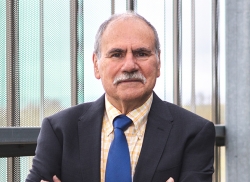
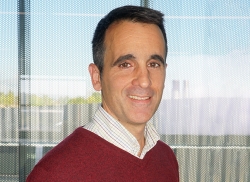
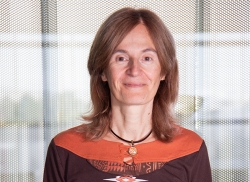
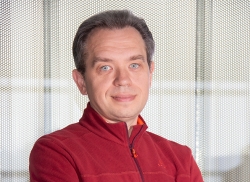
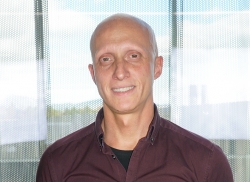
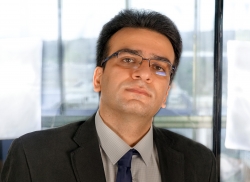
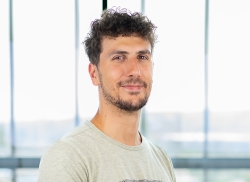
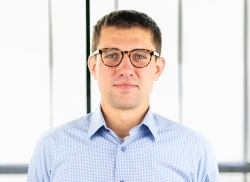
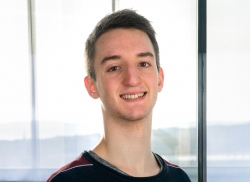
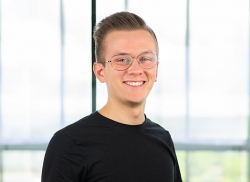
John Kilner
Dr. Kilner is a Professor of Materials Science, former head of the Department of Materials and former Dean of the Royal School of Mines (Imperial College London).

He has been involved in research into ionic and mixed conducting ceramics for 30 years and has published over 250 papers in this and related fields of materials science.
Recently he was appointed as European Editor for the Journal Solid State Ionics. He is the holder of a number of patents relating to fuel cells and gas separation devices and the co founder of a successful spinout company CeresPower Ltd.
Prof. Kilner is primarily interested in studying the exchange and diffusion of oxygen in oxide ceramic materials for applications in devices such as fuel cells, oxygen separators and sensors, and has been instrumental in the development of isotopic exchange SIMS techniques to study these phenomena.
Much of his work is now centred upon the development of the Intermediate Temperature Fuel Cell and improved understanding of surface and interfacial phenomena is crucial for further development of this device.
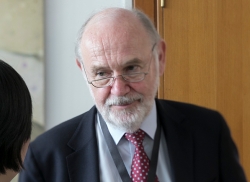
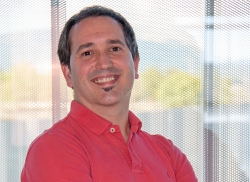
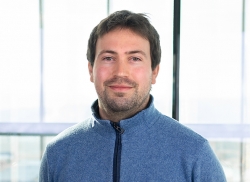
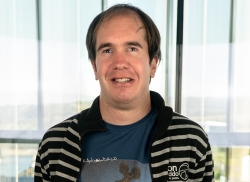
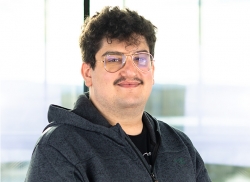
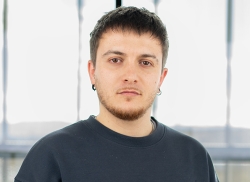
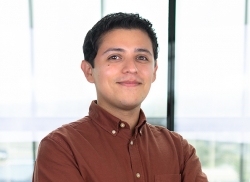
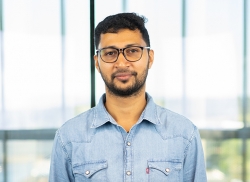
Imre Gyuk
Dr. Imre Gyuk: After taking a B.S. from Fordham University, Dr. Gyuk did graduate work at Brown University where he was research assistant to Nobel Laureate Leon Cooper working on superconductivity. Having received a Ph.D. in Theoretical Physics from Purdue University, he became a Research Associate at Syracuse. As an Assistant Professor he taught Physics, Civil Engineering and Environmental Architecture at the University of Wisconsin. Research interests included the theory of elementary particles, metallurgy of non-stoichiometric alloys, non-linear groundwater flow, and architectural design using renewable energy and passive solar techniques. Dr. Gyuk became an Associate Professor in the Department of Physics at Kuwait University where he organized an international Workshop on the Environment of the Arab Gulf, and was a member of the Emir’s Taskforce on Technology and the Future of Kuwait.
After six years in the Gulf, Dr. Gyuk joined the Department of Energy to manage the Thermal and Physical Storage program. Later he managed DOE's research on biological effects of electric and magnetic fields. Currently he directs the Energy Storage research program of the U.S. Department of Energy which funds work on a wide variety of technologies such as advanced batteries, flywheels, super-capacitors, and Compressed Air Energy Storage.
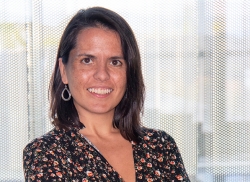
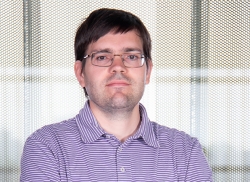
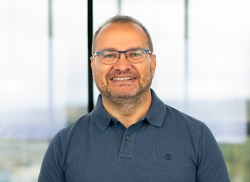
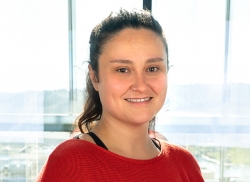
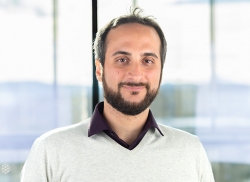
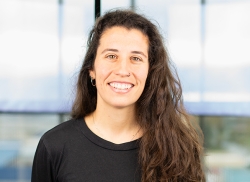
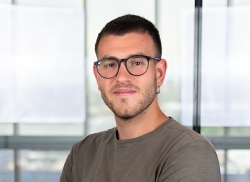
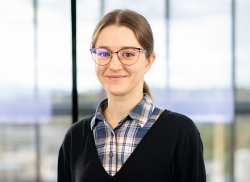
Ander Laresgoiti
He received his undergraduate degree in Mechanical Engineering from the School of Engineering in Bilbao. He obtained an MS degree in Mechanical Engineering at the University of Michigan in 1972, and PhD also in Mechanical Engineering at the University of Michigan in Ann Arbor in 1976. In that time he worked on the influence of the first catalytic converters on the emissions of cars.
His present field of research is Solid Oxide Fuel Cells. Metallic support solid oxide fuel cell development and testing, development o SOFC fabrication methods, design and testing of the Balance of Plant and auxiliary equipment.
Since 1977 he has been a research Engineer at Ikerlan working on the development of energy efficient home appliances and HVAC systems and on the development of simulation tools for heating, cooling and energy flows in buildings. Since 1996 he has been the director of the Energy Unit. He has worked on the development of heat pumps, home refrigerators and freezers, efficient buildings, heat and power systems for houses and buildings, etc.
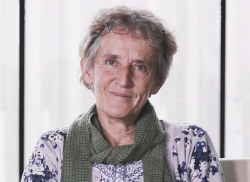
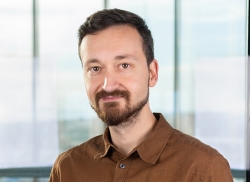
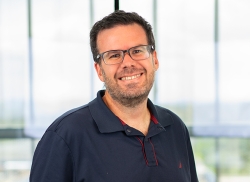
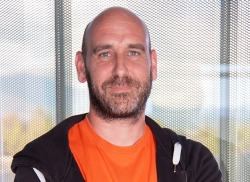
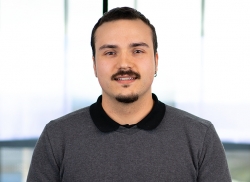
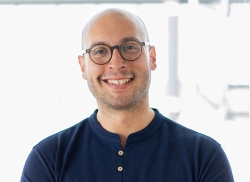
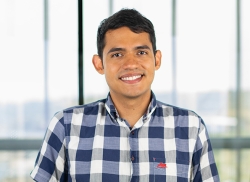
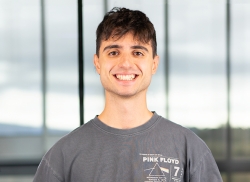
Jean Marie Tarascón
Dr. Jean Marie Tarascon is presently professor at the University of Picardie (Amiens), but most of his career was done in the USA, first at Cornell University (1980), then at Bell Laboratories and finally at Bellcore until 1994. His field of research lies in the development of new techniques for the synthesis of new electronic materials (new superconductors, new ferroelectrics, new fluoride glasses and new rechargeable batteries materials) for new solid state electronic devices, and relating crystal structure to electronic, optical and magnetic properties.
He has made outstanding contributions to the field of superconductivity and he is the one who is at the origin of the thin and flexile plastic Li ion battery based on a strong and highly resistant hybrid polymer system that is presently commercialized. Presently, as the head of the Institute of Chemistry of Picardie and coordinator of the European Research Institute for battery research (ALISTORE ERI) he is exploiting new Li reactivity concepts such as conversion or displacement reactions, and novel electrodes designs for the next generation of Li ion batteries based on nano electrodes/electrolyte components.
He is Author of about 60 patents and more than 400 publications, recipient of many awards, the last in line being the Volta Medal, the 2004 “ISI AWARD”, his nomination at the French Academy of Sciences in 2005 and the UPJV gold medalist in 2008.
Hisashi Tsukamoto
Dr. Tsukamoto started Quallion LLC with Dr. Alfred E. Mann and currently serves as the President and Chief Technology Officer for the company. He oversees operations and all research and development efforts. Company milestones under Dr. Tsukamoto's leadership include the development and introduction to market of over 5 separate product lines of implantable and external grade medical batteries within the first 3 years. Dr. Tsukamoto has also directed research efforts resulting in the development of new advanced chemistries and materials exhibiting superior cycle and calendar life capabilities as well as safety performances.
Prior to joining Quallion, Dr. Tsukamoto worked for Japan Storage Battery Co., Ltd. for 19 years. As the Manager of Advanced Battery Laboratory and Fundamental Technology Laboratory, he was responsible for directing and coordinating the research and development of advanced lithium based battery and its fundamental technology, such as materials technology development. He also directed international research collaboration projects.
While at GS Melcotech Co., Ltd., Dr. Tsukamoto also managed the new products development team for consumer applications. This division was responsible for taking an ultra thin lithium battery design from prototype development to full-scale production. As the manager in charge of this start-up division, Dr. Tsukamoto had direct responsibility for business development efforts, purchasing and the facilities construction. GS Melcotech was a joint venture formed by Japan Storage Battery Co., Ltd. and Mitsubishi Electronic Inc. to commercialize certain lithium based battery technologies. As a member of GS-Melcotech's Strategic Planning Division, Dr. Tsukamoto was responsible for overseeing planning at the corporate level, which included project development, cost assessments and resource allocation.
Dr. Tsukamoto includes in his career milestones achievements numerous patents and publications as well as the development of the following technologies: An electrochemical oxygen remover with using fuel cell's oxygen recombination electrode technology An Ultra-Thin Ni Cd button cell for card radio applications A prismatic Ni Cd battery for portable cassette players A molten salt Li thermal battery for the Japanese Self Defense Force A Li-ion battery for mobile telephones The highly conductive new active material LiMgCoO2 for Li rechargeable batteries The world's first 5V, LiCoMnO4 material for Li rechargeable batteries.
Steven Visco
Dr. Steven Visco is a Principal Investigator in the Materials Science Division at the Lawrence Berkeley National Laboratory. Dr. Visco graduated with a B.S. in Chemistry from the University of Massachusetts in 1977 and received his Ph.D. in Physical Chemistry from Brown University in 1982. Steven spent two years as a Postdoctoral Scientist at the University of California at Santa Barbara working on the research and development of solid electrolytes for advanced batteries. Dr. Visco then joined the staff at the Lawrence Berkeley National Laboratory as a Principal Investigator in the Materials Sciences Division in 1984 where his research interests have included solid state ionic devices such as batteries, fuel cells, ionically conductive ceramic membranes, and electrolytic gas separation. Steven Visco is also cofounder and Vice President of PolyPlus Battery Company in Berkeley California. In 1990 Steven Visco cofounded the PolyPlus Battery Company, based on technology developed at LBNL, a California Corporation in Berkeley. Dr. Visco serves as Vice President of Research at PolyPlus. Dr. Visco has published over 75 articles in scholarly journals, and holds more than 50 issued U.S. patents (and 40 foreign patents).